Often, giving homeowners, or anyone looking to purchase, a mortgage is the largest monthly bill they'll have ever or will have. Over 30 years, that interest can equal or exceed what they borrowed. The idea of paying off a home early can seem difficult, but it isn't dependent on windfalls, just compound interest.
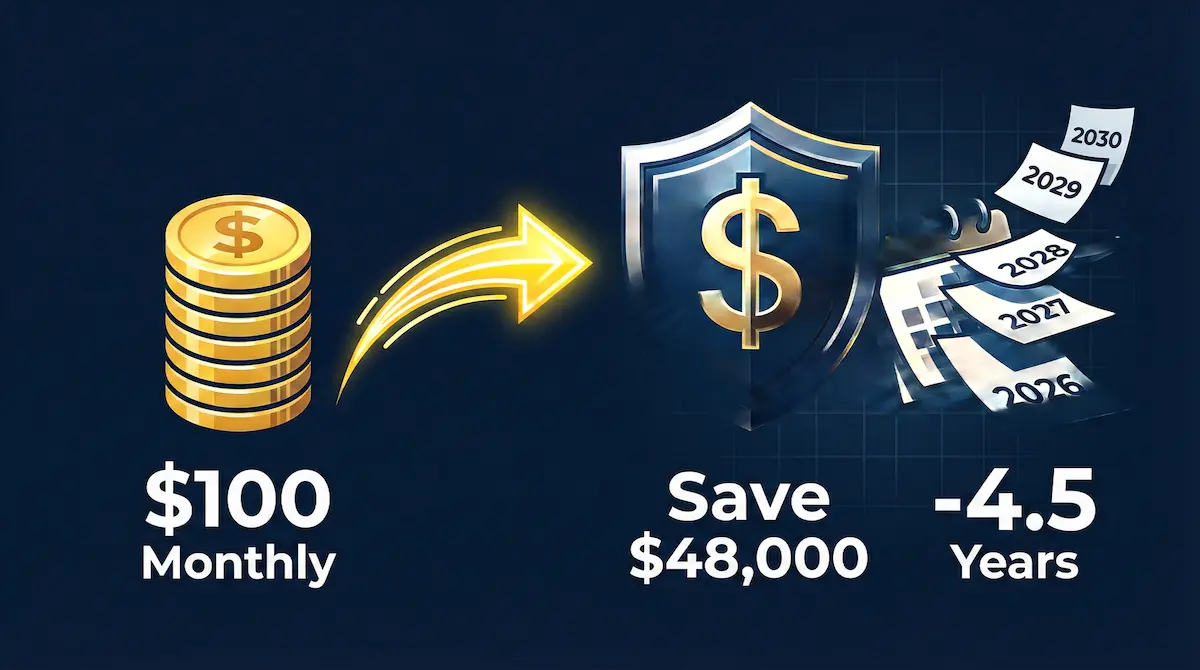
Adding only $100 to your payment per month may seem like a small amount; however, over a period of 15 to 30 years, this is an excellent way to build wealth.
1. How it Works (Math)
When you pay your monthly installment for the mortgage, the bank charges the interest for the current month. The balance is paid to the principal. Initially, you pay as much as 70-80% of the installment as an interest.
If you add another $100 with the label "Principal Only":
- Immediate reduction of principal: The total amount of $100 directly reduces your debt without considering interest.
- Less concern with future implications: With your current balance being $100 lower, the amount of interest charged going forward each month will be lower.
- Snowball effect: The smaller balance implies that more of the regular payment will go towards paying off the principal faster.
2. Example: A $300,000 Mortgage
Assume:
- Loan amount: $300,000
- Interest Rate: 6.5%
- Term: 30 years (Fixed)
- Standard monthly payment (Principal + Interest): $1,896
Scenario comparisons:
Standard payment:
- Total interest paid: $382,633 in 30 years
- Payoff period: 30 years
- Total savings: $0
With +$100 extra per month:
- Total interest: $334,120
- Payoff time: 25.5 years
- Total Savings: $48,513
Therefore, by adding an extra $100 per month, you effectively get an increase of approximately $48,513 and save 4.5 years of payments.
3. Why Paying Early Is Better Than Paying Late
What you pay when you pay it matters. Since mortgage balances are amortized, it means that prepays are valued more in year one compared to year 20 for a $100 payment.
In year one, that $100 will result in less interest accruing over the next 29 years. If you wait until the end, there will be very little interest left to save.
The moral: Begin now, no matter how small the amount.
4. Other Benefits beyond the Numbers
-
Guaranteed Return - You get a guaranteed return when you repay the mortgage, which is equal to your rate. If your rate is 7%, your extra payment earns a 7% risk-free return.
-
Increased cash flow later in life: By cutting 4-5 years from your mortgage, you will gain years where your housing expenses are $0, increasing your cash flow in retirement years.
-
Improved debt-to-income (DTI) ratio: Lower loan amount and more home equity boost your creditworthiness, making it easier to obtain other loans or secure more favorable insurance terms.
5. Before you begin: Some things to check
Before sending off another $100, check:
-
Emergency Fund: Do you have 3-6 months of savings for expenses? It's tougher getting money out of the house than getting it into the house.
-
High-interest debt: Consider paying off credit card debt with a high interest rate at 20% APR first.
-
Prepayment penalties: Although infrequent for a modern loan, you must ensure prepayment is unlimited without penalty.
Conclusion
You don't need a large bonus in order to change your financial future. The $100 power lies in its simplicity and regularity. These small habits will add up over time and form the basis for achieving financial independence.